

Of course, you can’t truly discover how to be a good writer just by being a good reader; that’s like assuming you can play pro football because you watch every game live, or assuming you can play a masterful piano concerto just because you own a high-quality stereo system.
All readers have been asked this question at least once in their lives:
“You read a lot, so you must write well too, right?”
Quite flattering, but hardly true. Unfortunately, a huge misconception, and we’re bout to debunk it!
Let’s look at the reasons why being a good reader doesn’t make you a good writer, and how to be a good writer.
Writing as a form of self-expression

Writing is born from the chaos in the mind, the hurricanes and tornadoes of ideas swirling and begging to be put into words. Writers are often born with a knack for storytelling. They can lure readers into their captivating world and keep them hooked till the very end. At its core, good writing is good storytelling, the ability to breathe life into characters, layer plotlines, and give emotion a voice.
But it’s more than just a skill. It’s a passion
“Writing is not about self-expression; it’s about putting words on paper.– Gordon Lish”
And in many ways, that is true. Writing demands discipline, structure, and relentless practice. But for many writers, putting words on paper is self-expression. It’s how they untangle the knots in their minds and make sense of the world around them.
Writers weave different plots together, combining elements from their own lives and circumstances into their writing.
Readers, on the other hand, express themselves differently. They inhale the writer’s words and live inside the story’s heartbeat. Their role is less physical, more cerebral, interpreting, decoding, connecting the dots between the lines.
And yet, the best writing forms a bridge between both worlds. It allows the writer to sprinkle words like stars in the sky, leaving the reader’s eyes wide open and spellbound, like a child looking up at the night sky.
The Myth of Osmosis Learning
Writing is a messy process, full of false starts, edits, and more drafts than you’d like to admit. It takes time and effort to shape raw thoughts into compelling sentences. Great writing doesn’t appear overnight; it’s built through sleepless nights, sweat, and even tears. It takes practice, patience, and a whole lot of failure to become a good writer.
Many fall for the myth that reading great writing will automatically teaches one how to be a good great writers. As if exposure to brilliance is enough to replicate it.-scoffs-
But reading alone isn’t going to cut it: You cannot become a painter by simply watching others paint.
You have to pick up the paintbrush, get your hands dirty, make mistakes, and keep going.
You’re not going to like the first piece you paint, and that’s okay. Writing is no different. The only way to become a writer is to write, despite how horrifying it turns out to be. Just write!
Readers who believe in osmosis learning often face the harshest form of writer’s block because they expect their words to flow like those of the authors they admire. But writing takes effort, not a tower of inspiration.
“Write while the heat is in you. The writer who postpones the recording of his thoughts uses an iron that has cooled to burn a hole with. He cannot inflame the minds of his audience. – Thoreau”
The Reader’s Trap [Analysis Paralysis]
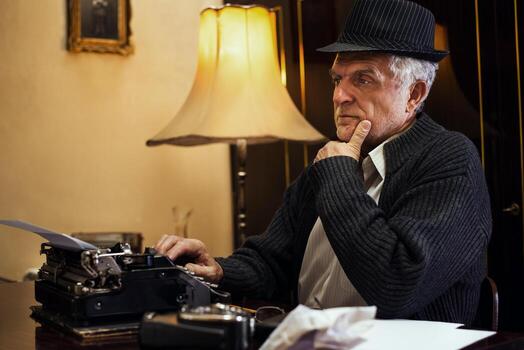
A good reader doesn’t just read the words, but rather inhales every message with clarity. They dissect themes, decode subtext, visualize entire scenes in their head, and hunt for hidden meanings between the lines. Their mind is programmed to look for detail, for structure, for rhythm.
They’re literary detectives, and overthinking is their biggest superpower.
But what happens when this superpower becomes a curse?
Easy, they fail to write. But why?
Because here’s the thing: readers like these are just not impressed. They are huge critics. They crave punchy openers, vivid imagery, and flow. So, when they sit down to write, they expect nothing but brilliance. But brilliance doesn’t show up in first drafts. And that’s where it all unravels: A good reader isn’t a good writer!
They freeze, not because they lack ideas, but because their inner editor is already critiquing them even before the paragraph ends, tearing them apart. Their ability to analyze becomes a shackle, caging them to perfection. Structure, vocabulary, grammar, they are familiar with all the rules, but can’t break them without guilt. They get stuck in a loop: why can’t I write?

In short, they’ve trained their minds to appreciate writing, not produce it.
Perfectionism sucks out the joy of writing and replaces it with dread. Experimentation is completely expelled, and mistakes are banished from the ground of writing for them. They fear mediocrity, forgetting that even the best writers began with drafts they’d never show anyone. Not even the trash can!
Final Practical Tips on How to Be a Good Writer
The harsh truth is, being a good reader is not the same as being a good writer. Readers and writers occupy two different worlds; one consumes stories, the other creates them. It’s easy to mistake the two because reading is part of the writing journey, but it’s only the beginning
But wait, does this mean reading is useless, then?
Of course not. Reading matters. It teaches you to think like a reader, to recognize rhythm, tone, and structure. It broadens your horizon. But the goal isn’t to inhale books; it is to digest them. Isolate what speaks to you, and leave the rest. Be good at comprehension and not completion, be meticulous and thorough.
If you want real tips on how to be a good writer, you have to embrace the craft’s messy reality:
- Write badly to write well: Give yourself permission to create clumsy first drafts.
- Silence the inner critic: Turn off your editing brain until the page is full.
- Focus on trial and error: Treat writing as a scrapyard of experimentation, not magic.
Because truth is: anyone can be a good reader. But writing? That’s a craft born from imperfection, clumsy first drafts, ideas that fall flat, and words that betray you. It’s trial and error, not talent, a scrapyard of mess from the wreckage of pages, not magic.
So don’t wait to write like the authors you admire. Write badly. Write bravely. And just keep going.
That’s the only recipe there is!