
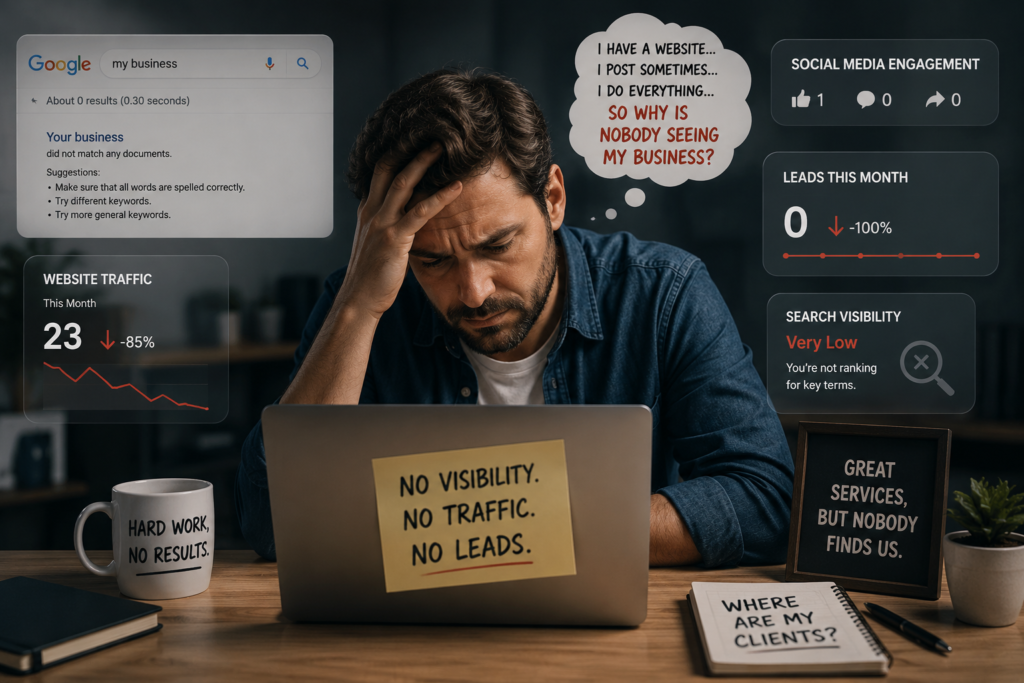
Building a powerful online presence for small businesses is no longer optional; it’s one of the biggest factors determining whether customers discover your brand or ignore it completely. Many businesses struggle because they lack a clear online presence business strategy that combines SEO, branding, content, and conversion optimization. If your company feels invisible online, the good news is that building an effective online presence for a small business is completely achievable with the right system.
There’s a quiet frustration that many founders and professionals carry. You’ve built something real, a business, a service, a skillset. You know it has value, and potentially more than you think.
But online, it’s as if you don’t exist.
No traffic. No inquiries.
No traction.
Meanwhile, competitors, sometimes less skilled, seem to attract clients effortlessly.
This isn’t luck. It’s visibility engineered with intent. And the hard truth is: If your audience can’t find you, they can’t trust you. And if they can’t trust you, they won’t buy from you.
The good news is: Visibility is not magic; it’s a system. And once you understand it, you can shift from being overlooked to being in demand. An effective online presence for small business creates visibility, trust, and long-term growth.
What an Online Presence Actually Means
Many business owners think having a website automatically gives them an online presence.
It doesn’t.
A real online presence is a complete ecosystem made up of three essential pillars:
1. Discoverability
Can people find your business through Google searches, social media, or online recommendations?
This includes:
- SEO optimization
- Search engine visibility
- Content marketing
- Local SEO
Without discoverability, your business stays hidden.
2. Credibility
Once people find your business, do they trust it?
Your credibility depends on:
- Professional web design
- Testimonials
- Reviews
- Case studies
- Brand consistency
Strong trust signals improve both conversions and search engine rankings.
3. Conversion
A beautiful website means nothing if visitors leave without taking action.
Your site should guide users toward:
- Booking consultations
- Sending inquiries
- Making purchases
- Joining your email list
This is where conversion-focused design becomes critical.
Why Many Small Businesses Stay Invisible

A weak online presence for small business usually comes from a few common issues.
1. Weak SEO Foundations
Many websites are not optimized for search engines.
Common SEO problems include:
- Poor keyword targeting
- Missing metadata
- Slow website speed
- Weak internal linking
- Unoptimized images
Without SEO, your audience simply won’t find you.
2. Generic Content
Publishing random blog posts without a strategy rarely works.
Content should solve real audience problems and answer specific search intent.
For example:
- “Why Your Website Isn’t Getting Traffic”
- “How to Increase Online Visibility for Small Businesses”
- “Best SEO Strategies for Startups”
These topics align with what users are already searching for.
3. Poor Brand Positioning
If your messaging sounds exactly like every other business online, you disappear into the noise.
Clear positioning matters.
People should immediately understand:
- What you do
- Who you help
- What makes you different
4. Lack of Trust Signals
Trust is one of the biggest ranking and conversion factors today.
Businesses without:
- testimonials
- reviews
- real examples
- portfolio pieces
often struggle to convert visitors into clients.
The Psychology Behind Online Visibility
People are not just searching for services. They are searching for certainty.
When someone visits your website, they subconsciously ask:
- Can I trust this business?
- Do they understand my problem?
- Can they actually help me?
Your website and content should answer those questions immediately.
A strong online presence for small business creates confidence before the first conversation even happens.
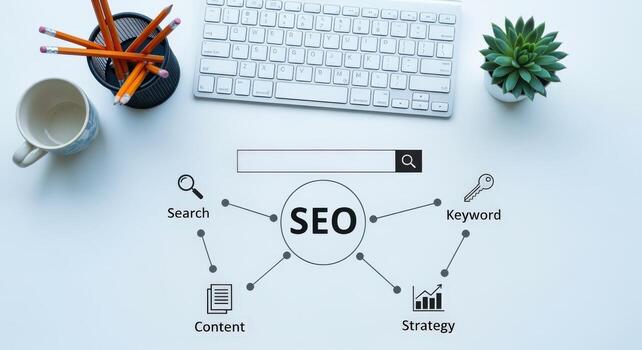
Step 1: Build a Search-Optimized Website
Search engine optimization is the foundation of online visibility.
Without SEO, even the best-designed website can remain invisible.
Target High-Intent Keywords
Focus on search terms your audience is already using. These keywords represent real customer intent.
Improve Website Structure
A clean structure helps both users and search engines navigate your website.
Recommended structure:
- Homepage
- Services
- Individual service pages
- Blog categories
- Contact page
This improves crawlability and user experience.
Optimize Technical SEO
Technical SEO plays a major role in visibility.
Important areas include:
- Mobile responsiveness
- Fast loading speed
- Secure HTTPS connection
- Optimized images
- Proper heading structure
Google rewards websites that deliver better user experiences.
Step 2: Create Content That Builds Authority
Content marketing is one of the most powerful ways to strengthen online presence for small businesses. But content only works when it is strategic.
Focus on Problem-Solving Content
Your audience searches for solutions, not random articles.
Create blog posts around:
- common frustrations
- industry questions
- comparisons
- tutorials
This attracts highly targeted traffic.
Use Semantic SEO
Modern SEO is no longer about repeating one keyword endlessly.
Search engines now evaluate topic depth and relevance.
If your article focuses on “online presence,” naturally include related concepts such as:
- digital visibility
- brand authority
- website optimization
- search rankings
- content strategy
This improves semantic relevance and topical authority.
Build Topical Authority
Publishing one good article is not enough. Businesses that dominate search results consistently cover related topics within their niche.
For example:
- SEO strategies
- branding tips
- website optimization
- lead generation
- content marketing
Together, these create a strong authority ecosystem.
Step 3: Design for Conversions
Traffic alone does not grow a business. Conversions do.
Your website should guide users toward action, not just be a design that follows trends.
Make Your Value Clear
Visitors should instantly understand:
- who you help
- what you offer
- why it matters
Confusion kills conversions.
Use Strategic Calls-to-Action
Strong CTAs help users take the next step.
Examples include:
- Get a Free Website Audit
- Book a Consultation
- View Our Portfolio
- Start Your Project
Simple, direct CTAs usually perform best.
Improve User Experience
A smooth experience increases trust and engagement.
Focus on:
- simple navigation
- clean layouts
- readable typography
- mobile-friendly design
Small UX improvements often lead to major conversion gains.
Step 4: Build Trust Through EEAT
EEAT stands for Experience, Expertise, Authoritativeness, and Trustworthiness. It is a framework used by Google to evaluate web content.
Google increasingly prioritizes EEAT, and therefore prioritise how your page will rank in search results.
A trustworthy business performs better both in search rankings and conversions.
Showcase Real Results
Use:
- case studies
- before-and-after examples
- testimonials
- measurable outcomes
Proof builds credibility faster than promises.
Demonstrate Expertise Publicly
Publish:
- in-depth blog content
- tutorials
- industry insights
- practical guides
This positions your brand as an authority rather than just another service provider.
Step 5: Build a Consistent Brand Across Platforms
Your website should connect with your wider digital ecosystem.
A complete and powerful online presence for small businesses extends beyond just one platform.
It goes beyond generic templates and more of focusing on platforms that will be saturated with your target audience.
Use Social Media Strategically
Choose platforms based on your audience.
Examples:
- LinkedIn → professionals and founders
- Instagram → visual brands and wellness businesses
- Facebook → local communities and engagement
While joining popular networks is a standard expert recommendation, success ultimately depends on focusing your efforts where your unique audience spends their time.
Consistency matters more than being everywhere. If you have trouble picking which network works best for your niche and business, see this article
Repurpose Your Content
One blog post can become:
- multiple social posts
- email newsletters
- short-form videos
- LinkedIn content
This increases reach while saving time.
The Long-Term Effect of Strong Online Visibility
When SEO, branding, content, and design work together, growth compounds over time.
Your business gains:
- higher search rankings
- stronger credibility
- better lead generation
- increased traffic
- more conversions
And this is how smart brands grow, using this smart web and technical solutions. Eventually, clients stop feeling impossible to find.
Instead, they begin finding you.

Final Thoughts
Building a powerful online presence for small businesses does not happen overnight. But it is one of the most valuable long-term investments any business can make.
The businesses that grow consistently online are not always the biggest or most talented.
They are the ones that are:
- visible
- trustworthy
- consistent
- strategically positioned
Digital Visibility is no longer about luck.
It’s about building a system that helps the right people discover and trust your brand.